
CT Scan vs X-Ray: When Doctors Choose Each Imaging Test
June 26, 2026
MRI Cost Without Insurance: What Patients Should Know
August 28, 2026
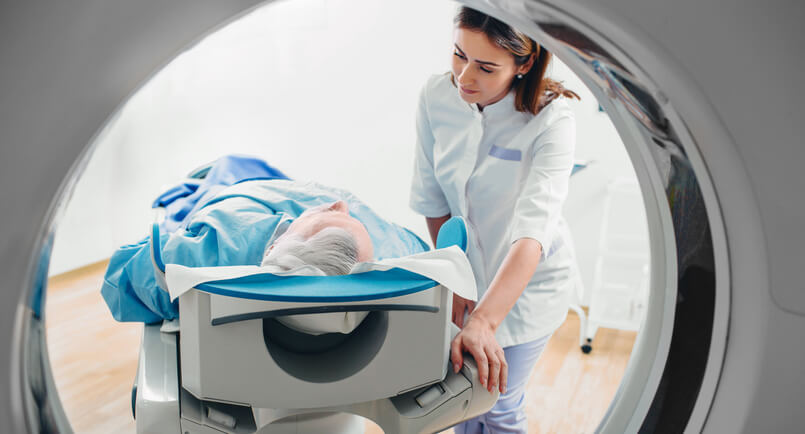
If you are scheduled for an MRI, one of your first questions may be, how long does an MRI take? Most MRI examinations take about 15 to 45 minutes, although some can last 60 minutes or longer. The U.S. Food and Drug Administration (FDA) gives a broader typical range of approximately 20 to 90 minutes, depending on the body part being examined.
Your total appointment may take longer than the time you spend inside the scanner. Safety screening, changing, positioning, contrast administration, and additional images can all affect the timeline. If you are preparing for an MRI in Dallas, Texas, knowing what happens before, during, and after the examination can help you plan your day and feel more prepared. Our team of medical technologists and board-certified radiologists at Crown Imaging can answer your queries when you book your appointment with us.
How Long Does an MRI Take?
There is no single answer to how long does an MRI take because the duration depends on the type of examination. RadiologyInfo.org reports that most MRI exams take between 15 and 45 minutes, while some may take 60 minutes or longer. The U.S. Food and Drug Administration similarly states that a typical MRI scan lasts approximately 20 to 90 minutes.
Several factors can influence your scan time, including:
- The body part being examined
- The number of images or sequences required
- Whether contrast is necessary
- Whether one or several areas are being scanned
- Your ability to remain still
- The MRI equipment and examination protocol
Usually, a straightforward examination may take less time than a complex study involving multiple areas or contrast. These are estimates rather than fixed standards. At Crown Imaging, we can give you a more specific timeframe when you visit.
What Happens Before Your MRI?
Your MRI appointment begins before you enter the scanner. Preparation and safety screening are important parts of the process and can affect how long you spend at the imaging facility.
Safety Screening
MRI uses a strong magnetic field, so your technologist needs to know about anything that could interact with the magnet. Before your examination, you may be asked about:
- Pacemakers and other implanted devices
- Joint replacements
- Stents
- Medication pumps
- Metal fragments
- Tattoos or medication patches
You should provide accurate information about implants and medical devices before entering the MRI environment. The FDA recommends careful completion of MRI safety screening because certain objects or devices can create safety concerns.
Changing and Preparing
Depending on the examination, you may be asked to change into a gown or other facility-provided clothing. You will generally need to remove metal objects and personal belongings that are not permitted in the MRI room.
Eating and drinking instructions vary by examination. If your MRI requires specific preparation, follow the instructions provided by your healthcare provider or imaging facility.
Positioning
A technologist will position you on a movable examination table. Depending on the body area being examined, a specialized device called a coil may be placed around or near that area. Padding or positioning aids may also be used to help you remain comfortable and still.
What Happens During an MRI Scan?
Once you are positioned, the MRI technologist performs a series of image sequences while monitoring you and communicating with you. Unlike X-rays and CT scans, MRI uses a powerful magnetic field and radio waves rather than ionizing radiation.
The table moves into the MRI scanner, and you will hear loud tapping, clicking, or thumping sounds as images are acquired. Earplugs or headphones are generally available to help reduce the noise.
During the examination, you can generally expect to:
- Lie still on the examination table
- Hear repetitive or loud sounds
- Communicate with the technologist
- Follow breathing or breath-holding instructions when necessary
- Use a call button if you need assistance
Remaining still is especially important because movement can affect image quality and may require sequences to be repeated. The technologist can communicate with you and monitor you throughout the examination.
How Long Does an MRI Take With Contrast?
When contrast is necessary, a gadolinium-based contrast agent may be administered through an intravenous (IV) line to make certain tissues or abnormalities easier to distinguish. Note that not every MRI requires contrast.
A contrast-enhanced MRI may involve these steps:
- Initial images are obtained.
- An IV is placed.
- Contrast is administered.
- Additional images are taken.
Because additional images may be required after contrast is given, contrast can increase the overall examination time. However, there is no universal number of additional minutes because the effect depends on the specific MRI protocol.
Some patients notice a brief sensation of warmth or an unusual taste after contrast administration. If you have concerns about contrast, discuss them with your healthcare provider or with our radiologist before the examination.
MRI Times by Body Part
The answer to how long does an MRI take really depends more on the examination protocol than simply the body part being scanned. Different areas require different sequences and imaging techniques.
How Long Does a Brain MRI Take?
A brain MRI typically involves multiple sequences to produce detailed images of the brain. The examination may take longer when contrast or additional sequences are required.
How Long Does a Spine MRI Take?
MRI can examine the cervical, thoracic, or lumbar spine. If more than one spinal region is being evaluated, the examination may require additional time.
How Long Does a Knee or Shoulder MRI Take?
Musculoskeletal MRI examinations generally focus on a particular joint. Proper positioning and remaining still help the technologist obtain usable images without unnecessary repeat sequences.
How Long Does an Abdominal or Pelvic MRI Take?
Abdominal and pelvic MRI examinations can involve multiple sequences, and some require breath-holding or contrast. Specialized examinations may therefore take longer than a straightforward MRI.
What Can Make an MRI Take Longer?
Several circumstances or factors can extend your examination beyond the initial estimate.
- Multiple body areas: Scanning additional areas generally requires additional sequences.
- Contrast-enhanced imaging: Additional images may be obtained after contrast administration.
- Movement: Images affected by movement may need to be repeated.
- Complex examinations: Some protocols require more imaging sequences.
- Breath-holding: Certain examinations involve repeated breath-holding instructions.
- Additional images: The technologist may obtain more images when necessary.
- Sedation or anesthesia: Patients who cannot remain still may require additional preparation and monitoring.
Staying still and understanding the procedure often also influence the length of the procedure. MRI procedures tend to be longer when involving children or patients who are anxious about the procedure. Preparation can help address challenges.
Tips to Make Your MRI Appointment Go Smoothly
A little preparation can make your appointment easier to navigate.
Before your appointment:
- Follow all preparation instructions provided to you.
- Tell the imaging team about implants or medical devices.
- Ask whether contrast will be used.
- Follow instructions regarding food and drinks.
- Arrive early enough to complete registration and safety screening.
During the examination:
- Listen carefully to the technologist’s instructions.
- Remain as still as possible.
- Tell the technologist if you are uncomfortable or anxious.
- Use the communication system or call button if you need assistance.
The FDA recommends discussing questions about the examination with the technologist, including concerns about claustrophobia and how long the scan is expected to take.
If you are having an MRI at Crown Imaging, asking about the expected duration before your appointment can help you plan for the time required at the facility.
Get Quality MRI Imaging and Service at Crown Imaging
MRI duration is only one part of the examination. The quality and completeness of the images are also important because the radiologist needs adequate information to interpret the study.
Modern MRI systems can produce detailed images of many parts of the body. The examination also depends on appropriate imaging protocols, proper patient positioning, and careful technical execution. After the scan, a radiologist reviews the images and communicates the findings to the referring physician.
At our Dallas-based diagnostic imaging facility, these elements may come together through advanced imaging technology, experienced technologists, and board-certified radiologists. Crown Imaging provides MRI as part of a broader diagnostic imaging environment that may also include X-rays, CT scans, ultrasound, and nuclear medicine.
If you want to know how long does an MRI take or what steps are involved to get your MRI, our team will be more than happy to answer your questions. If you are scheduled for an MRI at Crown Imaging, understanding the expected timeline can help you arrive prepared and know what to expect throughout the process. Speak with a representative from our team today.
Frequently Asked Questions
How long does an MRI take from start to finish?
The total appointment may be longer than the actual scanning time. You may need additional time for registration, safety screening, changing, positioning, and contrast administration. Most MRI scans take about 15 to 45 minutes, although some examinations take 60 minutes or longer.
Can an MRI take two hours?
Yes. Most routine MRI examinations do not take two hours, but some complex or specialized examinations can. An MRI usually takes around 30 minutes but can last up to two hours depending on the type of scan, number of areas examined, and whether contrast is used.
Does an MRI take longer with contrast?
It can. If contrast is needed, an IV must be placed and additional images may be obtained after the contrast is administered. However, not every MRI requires contrast, and the amount of additional time varies according to the examination protocol and the information your physician needs.
Do I need to arrive early for an MRI?
You should follow the arrival time provided by your imaging facility. Arriving early may give you enough time for registration, safety screening, changing, and preparation. Tell the staff about implants or medical devices before entering the MRI environment.
Can I leave immediately after an MRI?
After a routine MRI, you can generally leave once the examination is complete and the medical technologist has determined that additional images are not needed. If you received sedation, you may need additional monitoring and should follow the instructions provided by your healthcare team.

Related posts