Open MRI vs Closed MRI: Pros, Cons, and Comfort Tips
May 29, 2026
How Long Does an MRI Take? Timeline and What to Expect
July 31, 2026
Medical imaging is an essential part of diagnosing injuries, illnesses, and other health conditions. Two of the most familiar imaging tests are X-rays and computed tomography (CT) scans. Both use ionizing radiation, but they produce different types of images and answer different clinical questions. If you are wondering why your doctor recommends one test instead of the other, it would help to understand the differences between the two.
In this guide to CT scan vs X-ray, we explain how each test works, what it can show, and why your healthcare provider may choose one over the other. Our team at Crown Imaging offers the appropriate test depending on your doctor’s recommendation and the clinical question being investigated.
What Is an X-Ray?
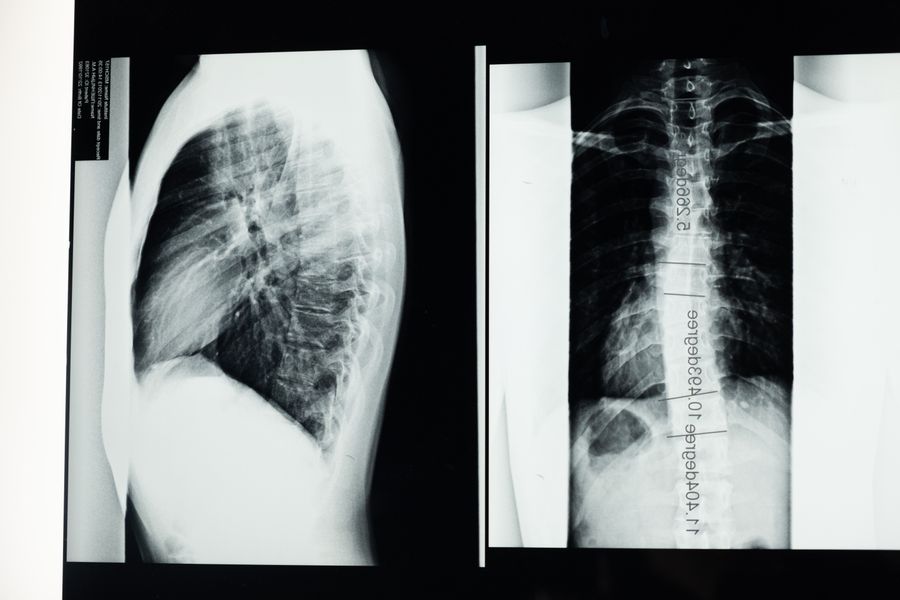
An X-ray is one of the oldest and most commonly used medical imaging tests. It works by passing a controlled amount of X-ray radiation through the body. It records how different tissues absorb it, producing a two-dimensional projection image.
X-rays are particularly useful for evaluating structures that are relatively dense or have clear differences in density from surrounding tissues. Common applications for this imaging test include:
- Broken or fractured bones
- Dental structures and jaw alignment
- Chest conditions, including some lung infections
- Joint alignment and certain degenerative changes
X-rays are generally quick, widely available, and relatively inexpensive. For many conditions, they are the first imaging test ordered because they can provide useful diagnostic information without the additional detail or radiation exposure associated with CT.
What Is a CT Scan?
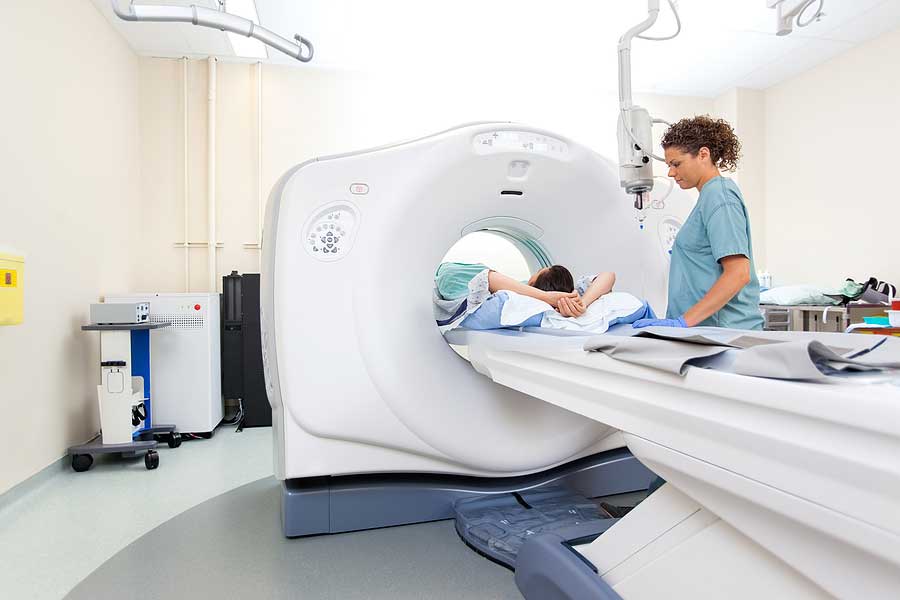
A CT scan uses specialized X-ray equipment to collect multiple images from different angles. A computer then reconstructs these images into cross-sectional views, or “slices,” of the body. These views can provide more anatomical detail than a conventional X-ray.
CT scans can be used to evaluate:
- Internal injuries after trauma
- Brain injuries and bleeding
- Organs and soft tissues
- Complex fractures
- Tumors and other abnormalities
Sometimes, contrast material is given orally or intravenously to make certain tissues, blood vessels, or abnormalities easier to see. Whether using a contrast is appropriate depends on the body area being examined and the clinical question.
CT Scan vs X-Ray: Key Differences
The main distinction in CT scan vs X-ray is the amount and type of information each test provides.
In terms of Image type
- X-Ray: 2D projection
- CT Scan: Cross-sectional, 3D-like views
In terms of detail level
- X-Ray: Basic
- CT Scan: Highly detailed
In terms of purpose
- X-Ray: Bones, chest, teeth
- CT Scan: Organs, soft tissue, complex injuries
In terms of scan time
- X-Ray: Usually minutes
- CT Scan: Often about 10–30 minutes, depending on the exam
In terms of radiation dose
- X-Ray: Lower
- CT Scan: Higher than standard X-rays
In terms of cost
- X-Ray: Generally lower
- CT Scan: Generally higher
An X-ray produces a projection image, meaning structures can overlap on the final picture. CT reduces this limitation by producing slices through the body. This makes CT particularly useful when a physician needs to distinguish between structures or examine an injury in greater detail.
CT generally takes longer and involves more radiation than a standard radiograph. The exact time and radiation dose vary according to the body region, equipment, protocol, and patient. Therefore, a more detailed test is not automatically a better test. The appropriate choice depends on what your doctor needs to determine.
When Doctors Typically Choose an X-Ray
Doctors often choose an X-ray when a plain image can adequately answer the clinical question.
Suspected Bone Fractures
X-rays are commonly used as an initial evaluation for suspected broken bones. They can identify many simple fractures and help assess bone position and alignment.
Chest Conditions
Chest X-rays may help evaluate conditions such as:
- Pneumonia
- Lung infections
- An enlarged heart
- Other visible abnormalities involving the lungs or chest
Dental Evaluations
Dental X-rays can help identify tooth decay, impacted teeth, jaw structures, and other dental abnormalities.
Joint Problems
X-rays may be used to evaluate arthritis, dislocations, joint alignment, and degenerative changes. They can also help monitor certain orthopedic conditions over time.
When Doctors Typically Choose a CT Scan
Doctors are more likely to recommend CT when they need detailed information that a conventional X-ray may not provide.
Serious Trauma or Internal Injuries
After a car accident or significant fall, CT can help identify internal injuries, complex fractures, or bleeding that may not be visible on a standard X-ray.
Stroke or Brain Injury
CT is frequently used in emergency settings to evaluate suspected brain hemorrhage and other acute abnormalities.
Cancer Detection and Monitoring
CT can help locate tumors, assess their extent, support treatment planning, and monitor changes during follow-up.
Complex Bone Injuries
CT provides detailed views of facial, pelvic, and spinal fractures, particularly when injuries involve multiple fragments or complicated anatomy.
Abdominal and Pelvic Pain
Depending on the circumstances, CT may help identify appendicitis, kidney stones, organ abnormalities, and other causes of abdominal or pelvic symptoms.
Why High-Quality Imaging Matters
The usefulness of an imaging test depends not only on the technology but also on how the examination is performed and interpreted. Modern imaging equipment can produce detailed images while protocols can be adjusted according to the examination and patient.
Accurate interpretation is also important. Qualified radiologists review images in the context of the patient’s symptoms, medical history, and other findings. In some settings, board-certified radiologists may provide specialized interpretation for different types of imaging.
High-quality imaging can contribute to:
- Clearer visualization of abnormalities
- More confident diagnosis
- Faster clinical decision-making
- Better treatment planning
- Appropriate follow-up when additional imaging is necessary
Crown Imaging is an example of an imaging facility serving patients in Dallas, Texas, where access to different imaging modalities can support physicians in selecting examinations appropriate to a patient’s clinical needs.
Find Out More About Our Services at Crown Imaging.
When comparing CT scan vs X-ray, neither test is universally better. X-rays are fast, accessible, and effective for many bone, dental, chest, and joint evaluations. CT scans provide more detailed cross-sectional images and are particularly useful for complex injuries, internal abnormalities, and certain emergency or cancer-related evaluations. Your healthcare provider can determine which examination is most appropriate based on your symptoms and medical history.
If you need to have your imaging done in Dallas, choose Crown Imaging. Book your appointment or contact our team to discuss more about your recommended test.
Frequently Asked Questions
Is a CT scan more accurate than an X-ray?
Not necessarily. CT provides more detailed images and can reveal abnormalities that may not be visible on an X-ray. Still, an X-ray can be the better choice for many straightforward clinical questions. Accuracy depends on the condition being evaluated and the type of information your healthcare provider needs.
Does a CT scan take longer than an X-ray?
Usually, yes. A conventional X-ray can often be completed within minutes. A CT examination may take longer because of patient positioning, scanning, and, when necessary, preparation or administration of contrast material. The actual scanning portion may be relatively brief.
Which imaging test exposes you to more radiation?
A CT scan generally exposes you to more ionizing radiation than a conventional X-ray because CT uses multiple X-ray images to create cross-sectional views. However, radiation dose varies by examination, equipment, and patient. Your doctor considers these factors when deciding whether CT is appropriate.
Can a CT scan replace an X-ray?
Not always. CT can provide more detailed information, but it is not automatically the appropriate substitute for an X-ray. If a simple X-ray can answer the clinical question, using CT may provide unnecessary additional radiation and expense. The appropriate test depends on the suspected condition.
When does a doctor order a CT scan after an X-ray?
Your doctor may order CT when an X-ray does not provide enough information or when a more complicated injury or abnormality is suspected. CT can show cross-sectional details of bones, organs, blood vessels, and soft tissues that may be difficult to evaluate on a conventional X-ray.

Related posts